This Otherworldly Oklahoma Wildlife Refuge Is the Only Place on Earth You Can Dig for These Rare Crystals
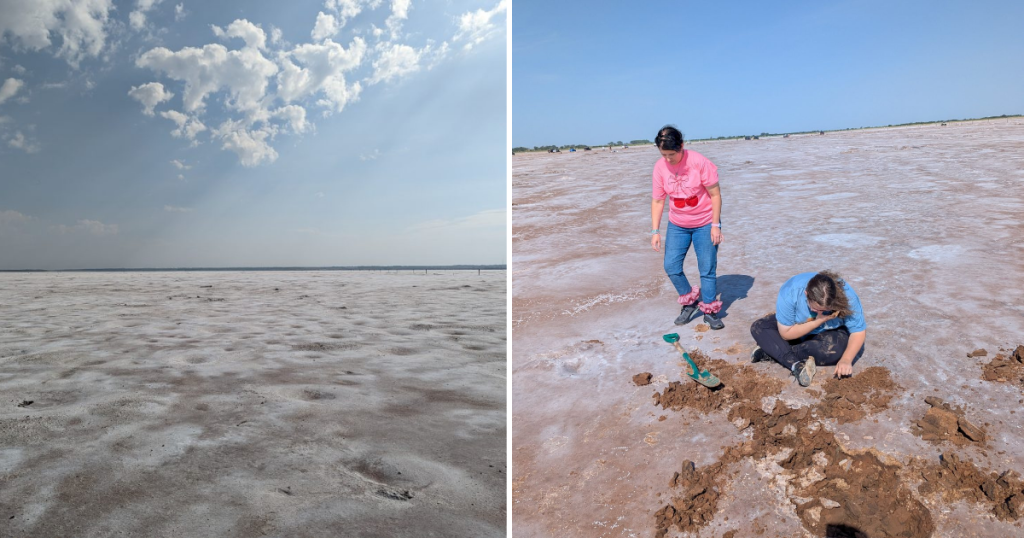
I’ve always been drawn to places that feel like they belong somewhere else entirely. Deserts that glow white under a punishing sun. Landscapes so quiet and so vast that you forget, for a moment, what state you’re in. Places that don’t look like they should exist where they do.
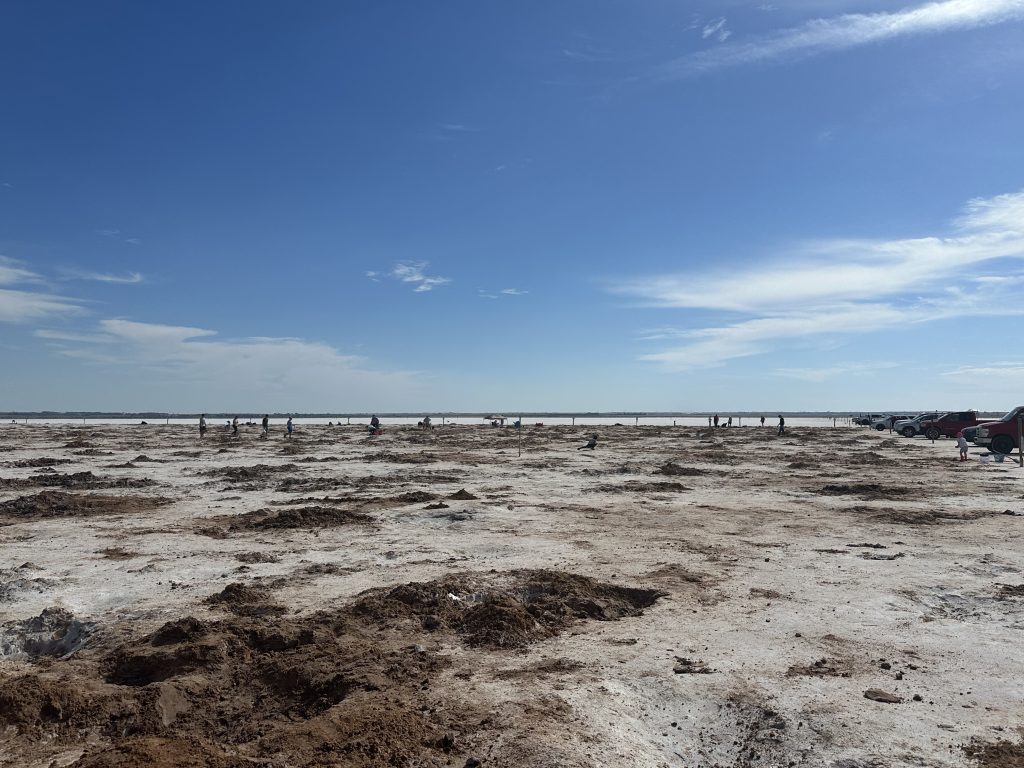
The Great Salt Plains National Wildlife Refuge in north-central Oklahoma is exactly that kind of place.
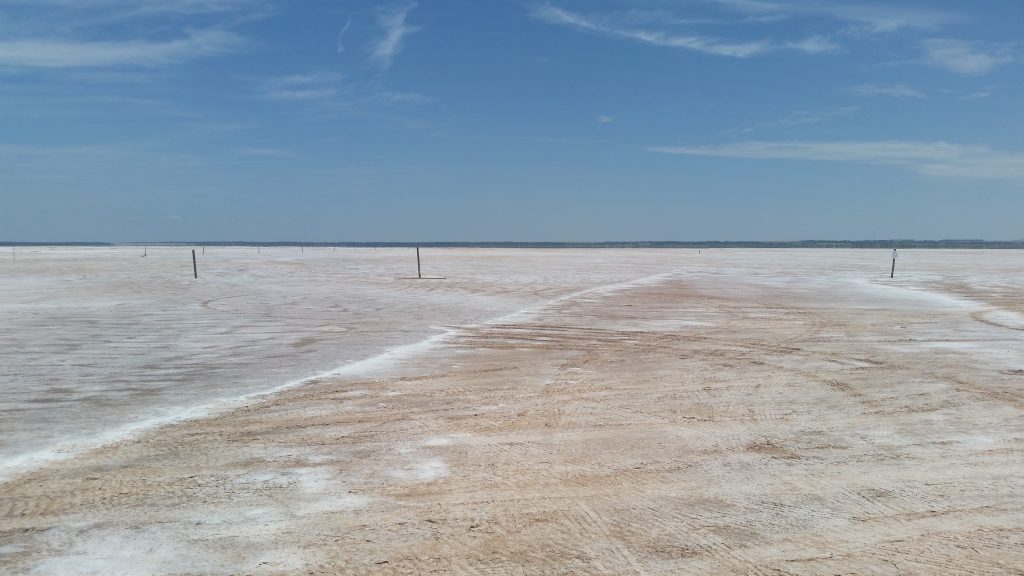
It looks like a scene borrowed from a sci-fi set — a blinding white expanse stretching out under a wide-open sky, the ground crunching beneath your feet, the horizon impossibly far away. But what makes this place truly unlike anywhere else on Earth isn’t just the view. It’s what’s hiding just below the surface.
Beneath that salt-crusted ground, a few inches down in the dark, wet mud, lie crystals unlike anything found anywhere else on the planet.
They’re called hourglass selenite crystals. And the only place in the world you can dig them up yourself, take them home, and call them yours — for free — is right here in Oklahoma.
A Crystal That Exists Nowhere Else on Earth
There’s something deeply satisfying about holding a thing in your hand that is, by geological definition, one of a kind.
Hourglass selenite crystals are a special form of gypsum. Translucent and glassy, each one grows in the salt-saturated soil beneath the flats. As the crystal forms, particles of sand, clay, and iron oxide get trapped inside — not randomly, but in a perfectly distinct hourglass shape, as if nature drew it by design.
That internal pattern is what makes these crystals so extraordinary. It doesn’t happen anywhere else. Geologists and mineral collectors have confirmed that this specific hourglass inclusion is unique to this one place on earth.
Most crystals visitors find range from one to three inches long. But seasoned diggers have unearthed blades stretching seven to ten inches. Clusters weighing up to 38 pounds have been pulled from this ground.
They score a 2 on the Mohs hardness scale, which means they’re soft and delicate. Handle them gently once you’ve freed them from the mud. But first — you have to find them.
How the Salt Plains Came to Be
Oklahoma isn’t the first place most people picture when they think about geological wonders. The Salt Plains have a tendency to change that assumption quickly.
Millions of years ago, ancient seas covered this region of central North America, leaving behind vast deposits of salt and gypsum buried beneath the surface. Over time, groundwater dissolved those underground layers and carried the brine upward.
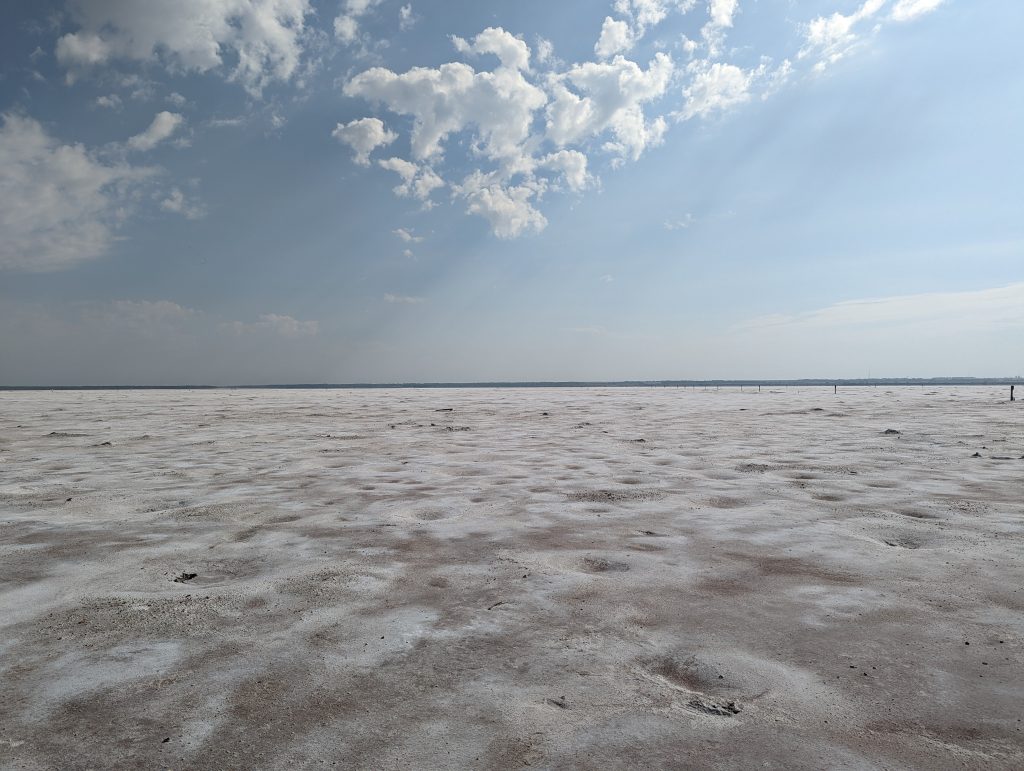
As that salty water reaches the surface and evaporates under the Oklahoma sun, it leaves behind a crust of white salt crystals — the signature landscape that gives this place its name and its otherworldly appearance.
That same evaporation process is responsible for the hourglass selenite crystals forming just below the surface of the mud. It’s essentially nature running its own crystal-growing experiment, right under your feet, year after year.
Walking out onto the flats for the first time has been described by visitors as surreal — the ground shimmering white, the silence almost complete, the sky going on forever. It’s a landscape that genuinely looks like it belongs on another planet.
Oklahoma’s Official State Crystal
In 2005, Oklahoma officially designated the hourglass selenite as the state crystal. That recognition was well earned.
No other location on Earth produces this specific crystal formation. That exclusivity has made the Salt Plains a legendary destination in the rockhound and mineral collecting community, drawing visitors from across the country who come specifically to dig up something they cannot find anywhere else.
Local educators and geology teachers frequently bring groups here because the crystal formation process is a perfect, real-world lesson in mineralogy. The site bridges science, history, and hands-on exploration in a way that textbooks simply can’t replicate.
Owning a crystal you personally pulled from the only place on Earth where it forms is a story worth telling for years. Not many souvenirs can make that claim.
The Crystal Dig Itself
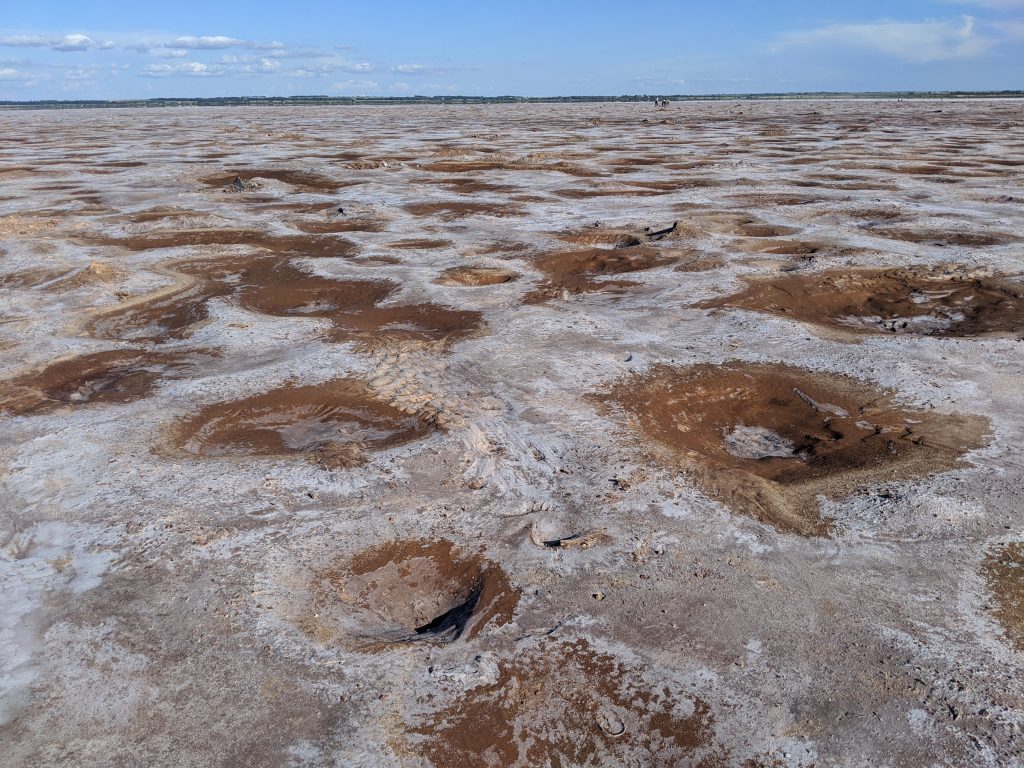
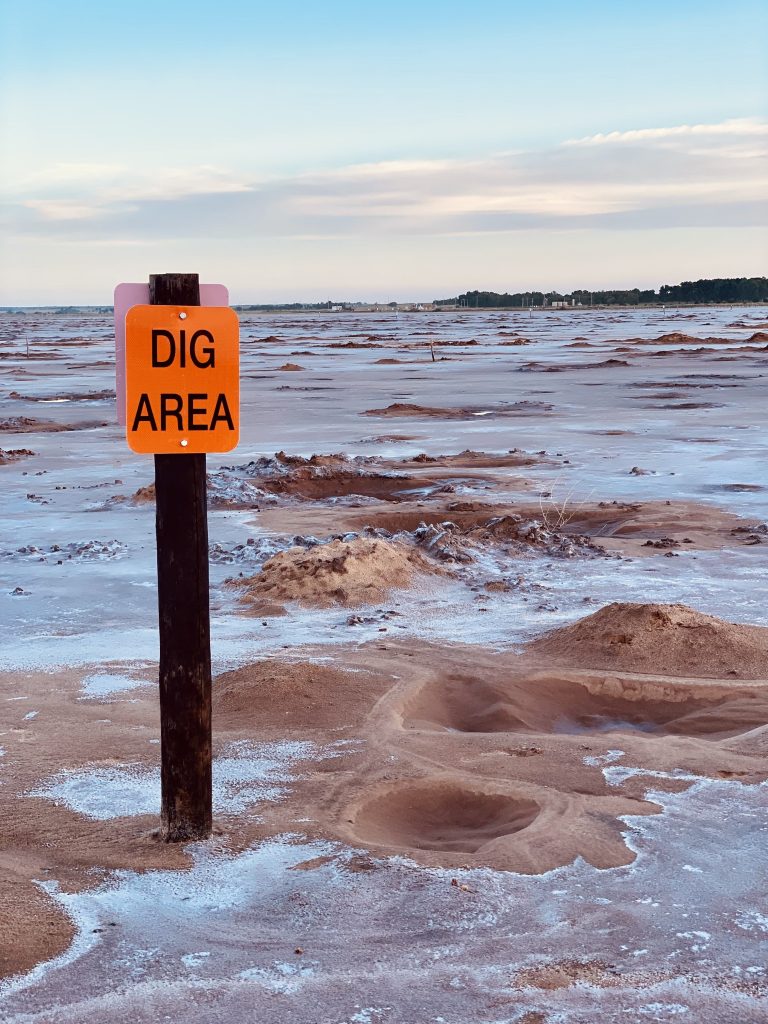
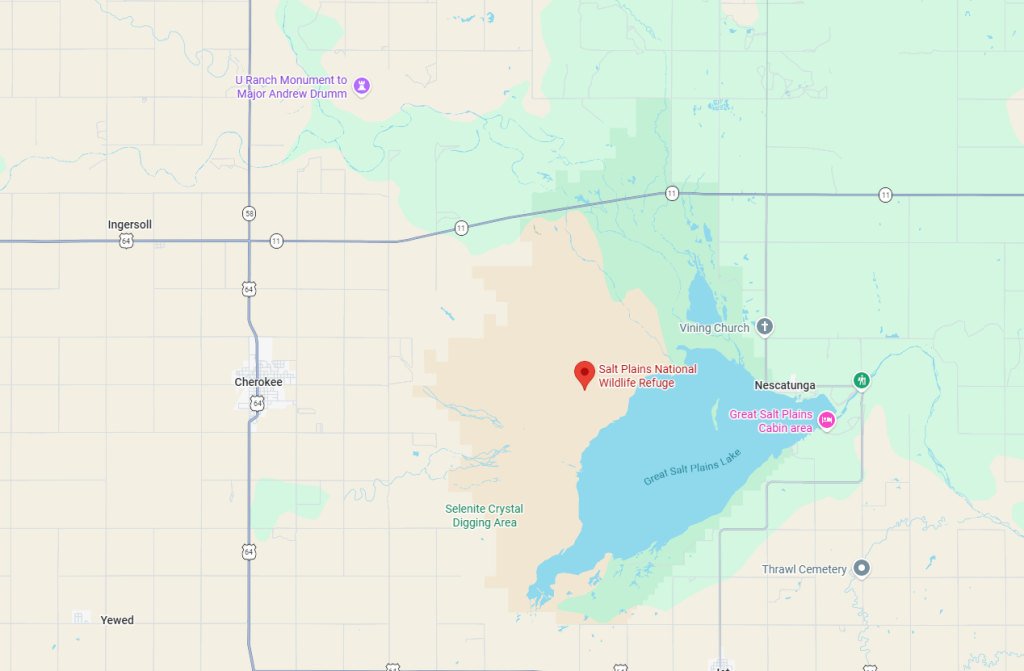
The designated crystal digging area is located within the refuge, about a mile through the gate along a dirt and gravel road. Bright orange signs mark the digging zone — you won’t miss it.
Digging season runs from April 1 through October 15, open every day from sunrise to sunset. Outside those dates, the area is closed to protect critical whooping crane habitat.
The experience costs nothing at all. No permit required. No reservation needed. No entry fee. You simply show up, bring your tools, and start digging.
Visitors are allowed to take up to ten pounds of crystals plus one large cluster per visit — for personal enjoyment only, as selling them is strictly prohibited. That’s still a generous haul, and more than enough to fill a bucket with genuine specimens.
Early in the season tends to be the most rewarding time to visit. In April and May, the surface-level gems haven’t yet been picked over by other visitors, and the heat hasn’t reached its summer peak.
The Oklahoma summer sun on open white salt flats is brutal in a way that sneaks up on you. There is zero shade out there. The white surface reflects light from below as well as above. Early morning arrivals or late afternoon visits make a significant difference in comfort.
What to Bring and How to Dig
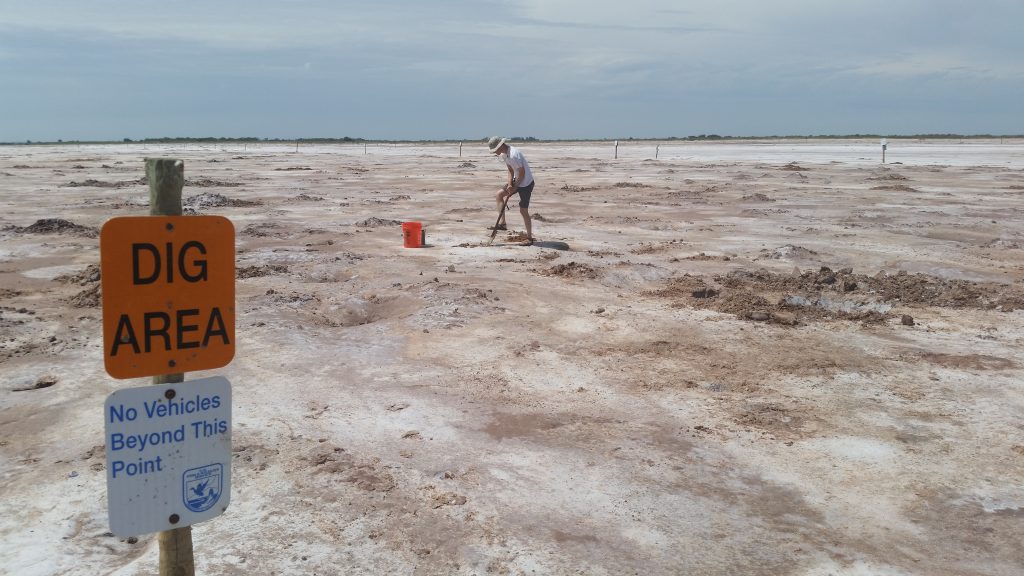
Good preparation turns this from a pleasant outing into an absolute adventure.
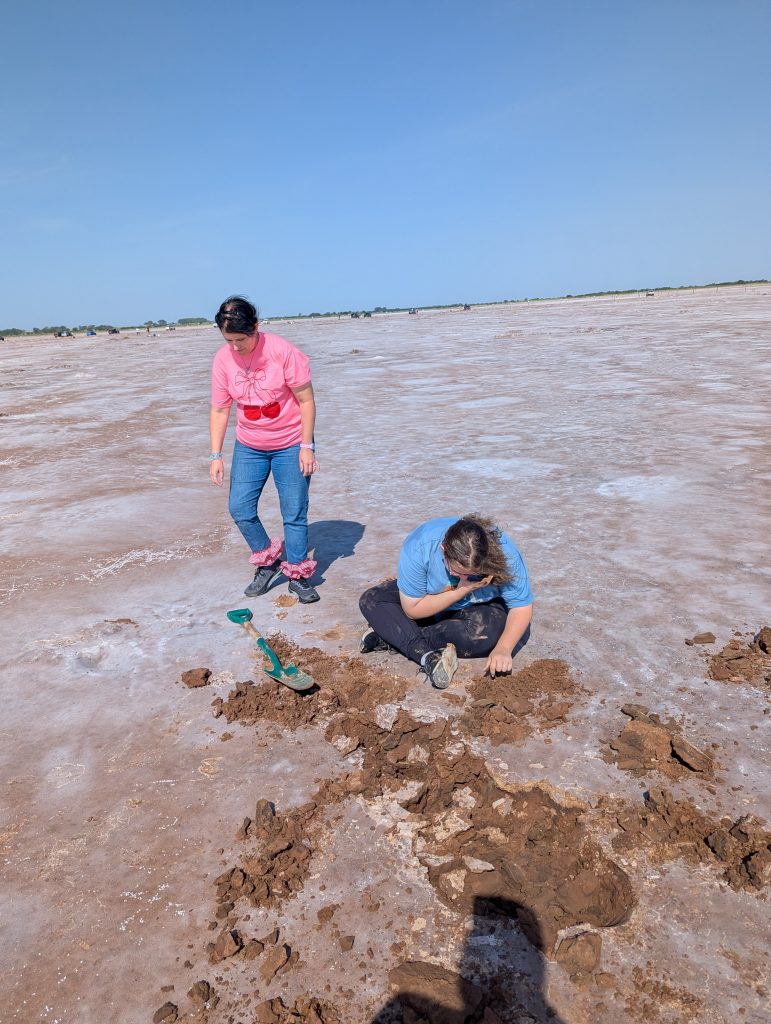
A sturdy shovel is the most essential tool. A smaller hand trowel helps with careful extraction once you feel something solid in the soil. Bring buckets to collect your finds and a generous supply of water — not just for drinking, but for rinsing crystals as you pull them up. Water reveals the hourglass pattern almost immediately, washing away the red-tinged clay to show what you’ve found.
Experienced diggers often bring mesh screens to sift through muddy soil and catch smaller crystals they might otherwise miss. Gloves are a smart addition because crystal edges can be surprisingly sharp. More than one visitor has learned this lesson on their first dig.
Wear clothing you don’t mind getting thoroughly coated in salty mud — because that is exactly what will happen, and it’s part of the fun. Pack a change of clothes and a couple of towels. A wide-brimmed hat, sunscreen, and bug spray complete the kit.
One important detail: the salt gets everywhere. Into your car, into your bag, into your shoes. A trash bag for muddy gear before getting back into the vehicle saves a significant amount of cleanup later.
The technique itself is refreshingly simple. Dig a hole. Let it fill with water. Reach in. Crystals are abundant — many visitors report finding them just two to six inches below the surface, especially in wet conditions or after rain. Even first-timers tend to leave with something real.
More Than Just a Crystal Dig
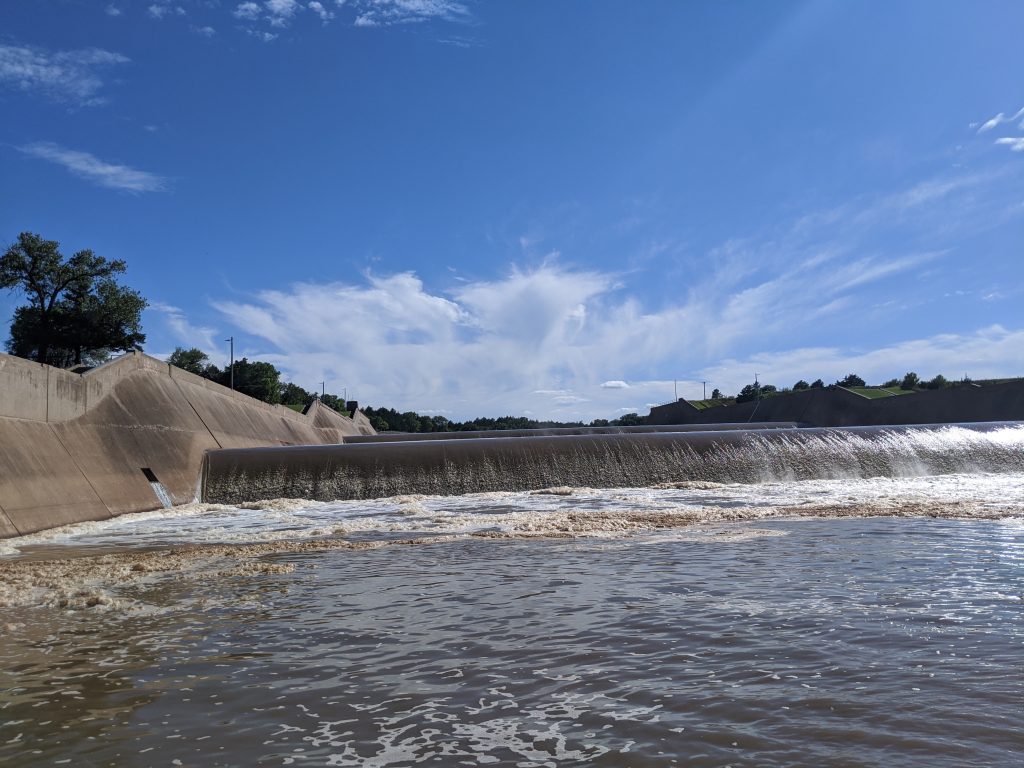
The crystal digging draws most of the visitors, but the rest of the Salt Plains National Wildlife Refuge is absolutely worth exploring before or after your dig.
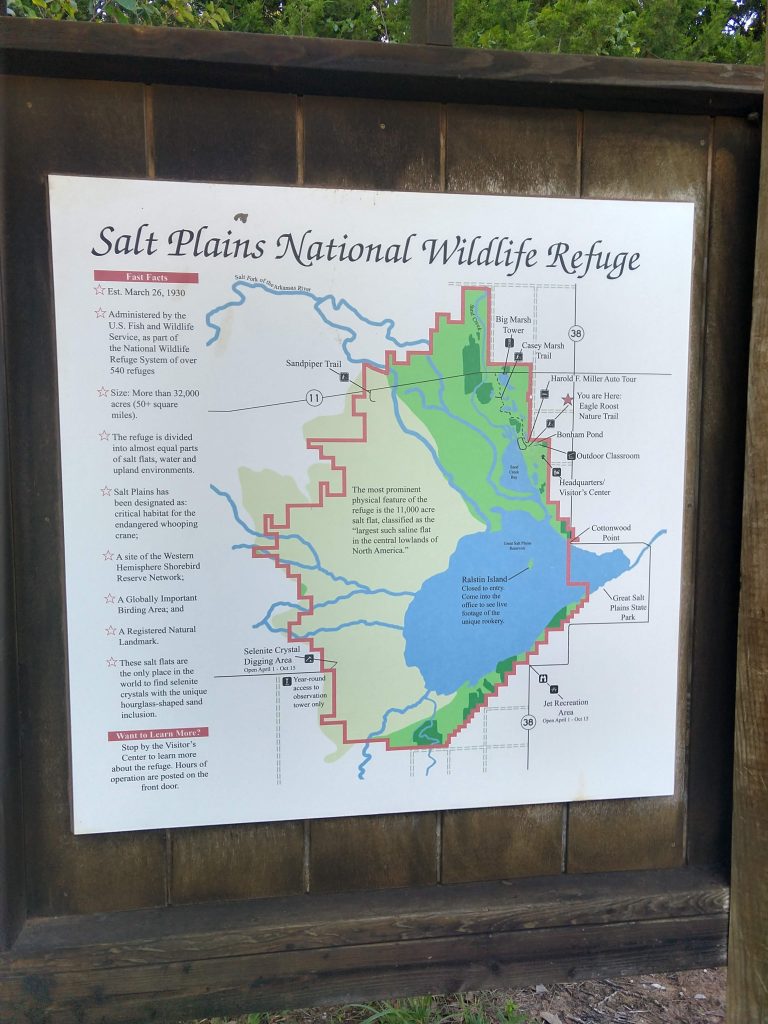
The refuge encompasses 32,197 acres of remarkably varied habitat — salt flats, wetlands, mixed-grass prairie, rolling sand hills, forested riparian areas, and the Great Salt Plains Reservoir. It was established in 1930 by executive order of President Herbert Hoover, created specifically as a resting and breeding ground for migratory waterfowl.
The salt flats alone support a remarkable web of life. Snowy plovers nest here. Endangered least terns breed on the flats. The entire refuge is designated as critical habitat for the whooping crane, one of the rarest birds in North America, most often spotted during fall migration. And here’s an unexpected detail: the holes left behind by crystal diggers actually provide shelter for brine flies that feed migratory shorebirds, while the spoil mounds create nesting habitat for snowy plovers. Your digging helps the wildlife.
A World-Class Birding Destination
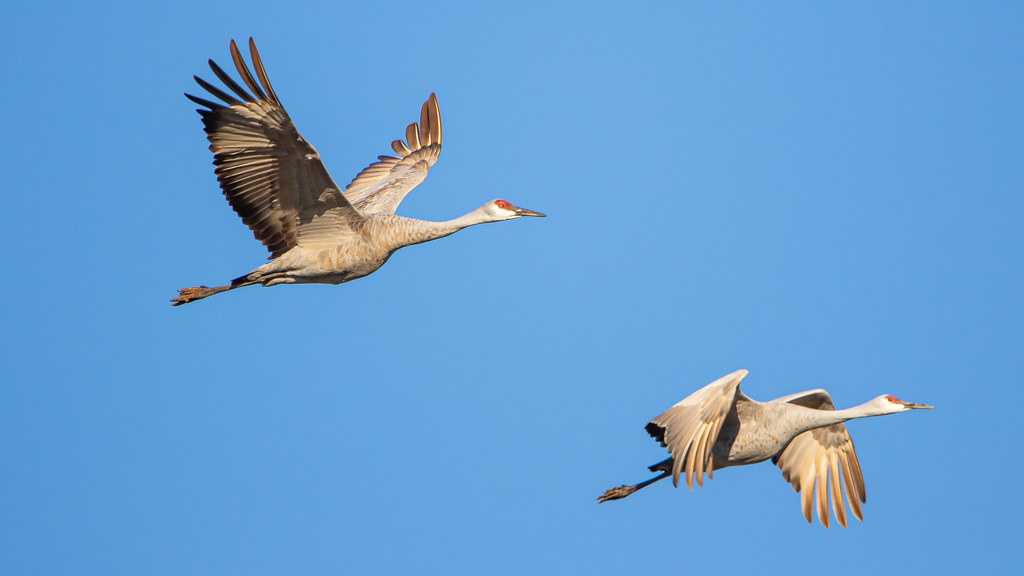
For birders, the Salt Plains National Wildlife Refuge is something close to legendary.
The refuge sits along one of the most significant migratory flyways in the Western Hemisphere. Hundreds of species pass through during spring and fall migrations, making this one of the premier birding destinations in the entire central United States.
Sandhill cranes arrive in spectacular numbers — visitors have described watching thousands of them in a single morning, filling the sky with their rattling calls. American white pelicans move through in large groups between August and September. Whooping cranes, American avocets, peregrine falcons, and bald eagles have all been spotted here.
Ralstin Island, located in the Great Salt Plains Reservoir and closed to the public to protect nesting birds, hosts more than 30,000 birds during breeding season. Over 30 species nest in the colony, including white-faced ibis, great blue herons, and tricolored herons.
In total, the refuge is home to habitat for approximately 312 species of birds and 30 species of mammals. Whether you arrive with binoculars around your neck or just keep your eyes open, something remarkable is almost guaranteed to appear.
Exploring the Refuge
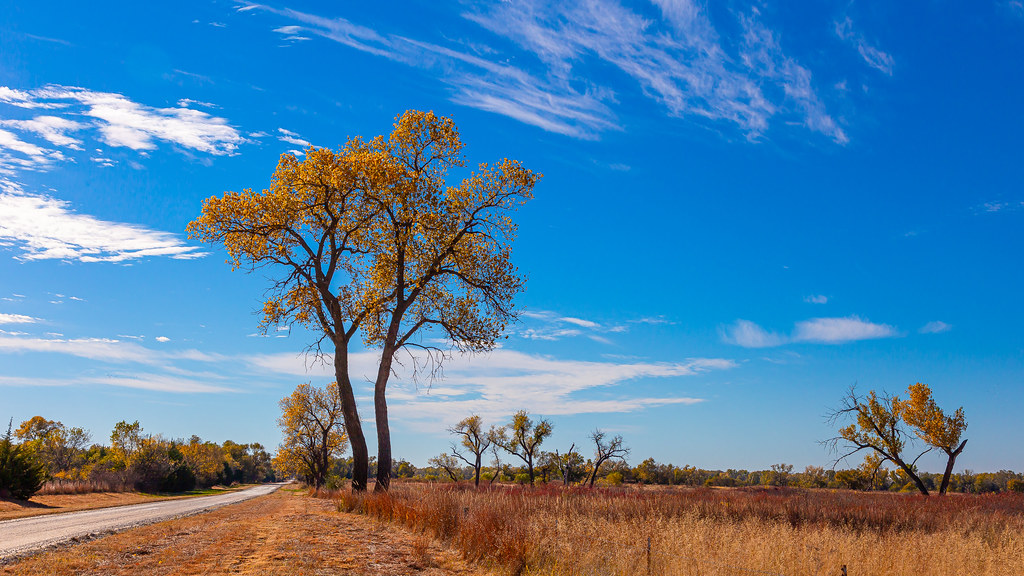
Beyond the salt flats and the bird life, the refuge offers several ways to experience its full beauty at a leisurely pace.
The Harold F. Miller Auto Tour Route winds 2.5 miles through the refuge, passing ponds and cultivated wildlife fields. White-tailed deer appear regularly along the route, and shorebirds work the shallow water’s edge. It’s a wonderful way to take in the breadth of the landscape without leaving your car — especially rewarding at the beginning or end of the day when light falls across the flats at a low angle.
The Sandpiper Nature Trail is a short, peaceful walk that leads from near the visitor center out to the edge of the salt flats, ending at a birding observation platform. The contrast between the lush, green riparian corridor and the stark white expanse of the flats is the kind of thing that stays with you.
The Eagle Roost Nature Trail is a 1.25-mile loop that moves through wooded areas, beneath towering cottonwood trees, past marshes and ponds, and down to a waterfowl watching area on Sand Creek Bay. Bald eagles are commonly spotted along this trail in fall and winter.
The Big Marsh Boardwalk is another peaceful option, offering elevated views of the wetlands and the bird life that depends on them. There’s a quiet magic to walking out over still water surrounded by marsh grass, listening.
A Place with Deep Roots
The Salt Plains have always drawn living things to them.
Long before the refuge was established, bison and other game animals came to the salt flats to eat. The heavily wooded, well-watered land along the Salt Fork River was an oasis in the surrounding grassland, and the area became a critical resource for the tribes of the Great Plains.
The Osage were firmly in control of the Salt Plains by the mid-1700s, and the salt found here played an important role in trade. It was prized for tanning deer hides and was traded across a wide region.
An 1811 expedition led by George Champlin Sibley — guided by an Osage man named Sans Oreille — was among the first documented visits to the area by non-Native explorers. Sibley named it the Grand Saline and reported that the salt deposits would eventually prove commercially valuable. He was right, though in ways he couldn’t have predicted.
Today, the refuge carries that deep history forward, protecting one of the most ecologically and geologically significant landscapes in the American interior. It was designated a National Natural Landmark in 1983 — a formal recognition of what visitors already sense the moment they step onto the flats. This place is genuinely irreplaceable.
What Visitors Say
People who visit the Salt Plains don’t tend to stay quiet about it.
Visitors describe pulling up to the flats and feeling genuinely speechless — “it initially looks like a field of snow,” wrote one. “Breathtaking to see the serene emptiness.” Another called it “like an ancient desert or another planet.”
Families return year after year. One visitor described their nine-year-old lighting up when they found a cluster, unable to stop talking about it for the rest of the trip. Others have driven three hours specifically for the digging and said it was worth every mile.
Even those who come expecting a minor curiosity leave describing it as one of the coolest outdoor experiences they’ve had. There’s something about digging with your hands in the earth and pulling out something rare and beautiful that bypasses sophistication entirely. It’s pure.
Tips for Your Visit
The refuge is free to enter and open every day from sunrise to sunset. The visitor center is located two miles south of State Highway 11 along County Road 710, and it’s worth a stop before heading out.
Crystal digging is open from April 1 through October 15. The digging area is located at 66003 Garvin Rd, Cherokee, OK 73728. The road into the dig site is dirt and gravel for the final stretch — standard vehicles manage it fine in dry conditions, but take it easy and be cautious after rain.
The nearest towns are small, so arrive prepared. There are no food vendors or convenience stores near the site. Pack a lunch, plenty of water, and everything you’ll need for a full day outdoors.
Going early in the morning is the smartest move — both for comfort in summer and for getting to dig areas before other visitors. Midweek visits offer noticeably more solitude.
After your dig, rinse your crystals thoroughly with fresh water to reveal the full detail of those hourglass inclusions. A soft brush helps remove stubborn clay without scratching delicate specimens. Then find a good light source and take a long look at what you’ve found.
It doesn’t look like anything else you’ll ever hold in your hands.
Where: Salt Plains National Wildlife Refuge, 66003 Garvin Rd, Cherokee, OK 73728
Share this story