This Historic Illinois Italian Deli Is Worth Planning Your Entire Chicago Trip Around
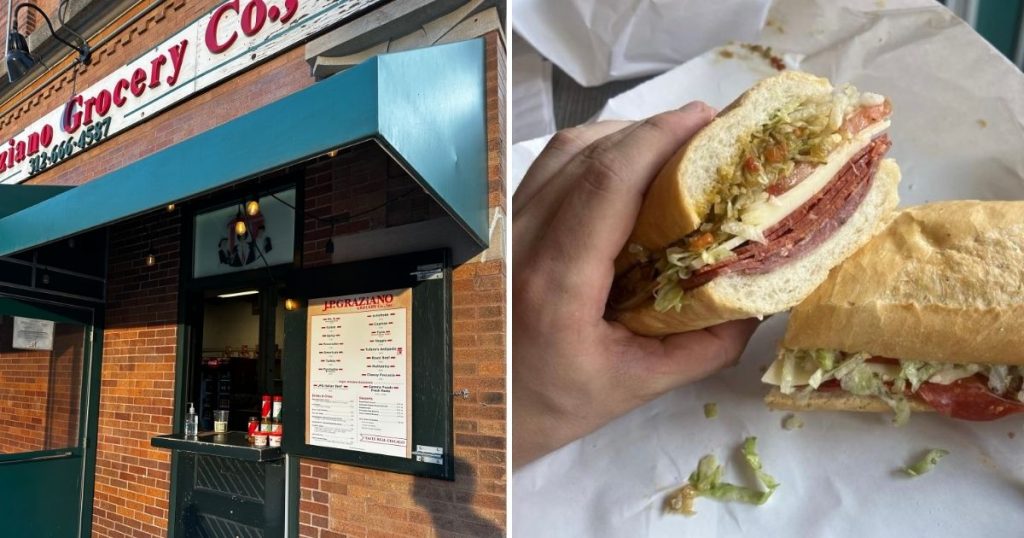
I’ve eaten a lot of sandwiches in my life. I’ve had them on the streets of Rome, at corner delis in New York, at a hundred roadside spots in between. I know what I’m looking for — the right bread, the right pull of the meat, the kind of flavor that makes you put the sandwich down for a second just to appreciate what just happened.
I wasn’t expecting to find all of that inside a narrow old building on a corner in Chicago’s West Loop. But that’s exactly what J.P. Graziano Grocery does to people. It stops them in their tracks.
Standing outside for the first time, you might almost walk past it. The storefront is modest, the kind of place that doesn’t announce itself loudly. But the line coming out the door tells you everything you need to know.
A Sicilian Stowaway and the Store That Started It All
Every great institution has an origin story, and J.P. Graziano’s is one worth savoring.
It begins in the early 1900s, with a young Sicilian man named Vincenzo Graziano from the seaside town of Bagheria, just outside Palermo. He left Italy as a stowaway — chasing a girl he’d fallen for — only to discover, mid-ocean, that she was already engaged.
Undeterred, Vincenzo followed his uncle to New York, then eventually made his way to Chicago. He arrived with almost nothing and survived by selling fruit on the streets, working his way up from a basket to a cart to a horse-drawn wagon.
By 1922, he had opened a proper brick-and-mortar grocery store. By 1937, the family had planted permanent roots on Randolph Street in the West Loop, and the J.P. Graziano Grocery Company was officially born.
That’s not just history. That’s the DNA of every sandwich they make today.
Four Generations, One Corner, Nearly 90 Years
The neighborhood around Randolph Street has changed enormously since 1937. What was once a working-class wholesale district is now the Fulton Market — one of Chicago’s most talked-about restaurant corridors, full of sleek, modern dining rooms and celebrity chef concepts.
J.P. Graziano hasn’t moved. Hasn’t needed to.
The grocery is now run by the fourth generation of the Graziano family — a brother and sister team who grew up behind that counter. Regulars describe the ownership the way you’d describe a favorite neighbor: warm, genuine, and genuinely glad you stopped in.
It’s the kind of family continuity you almost never see in a city that’s constantly reinventing itself. Walking through the door, you can feel the weight of all those decades — not in a tired way, but in the way that something feels when it’s truly, deeply earned.
The Moment the Sub Shop Was Born
For most of its history, J.P. Graziano was primarily a grocery: imported Italian cheeses, olive oils, cured meats, olives, and pantry staples that serious home cooks drove across the city to find.
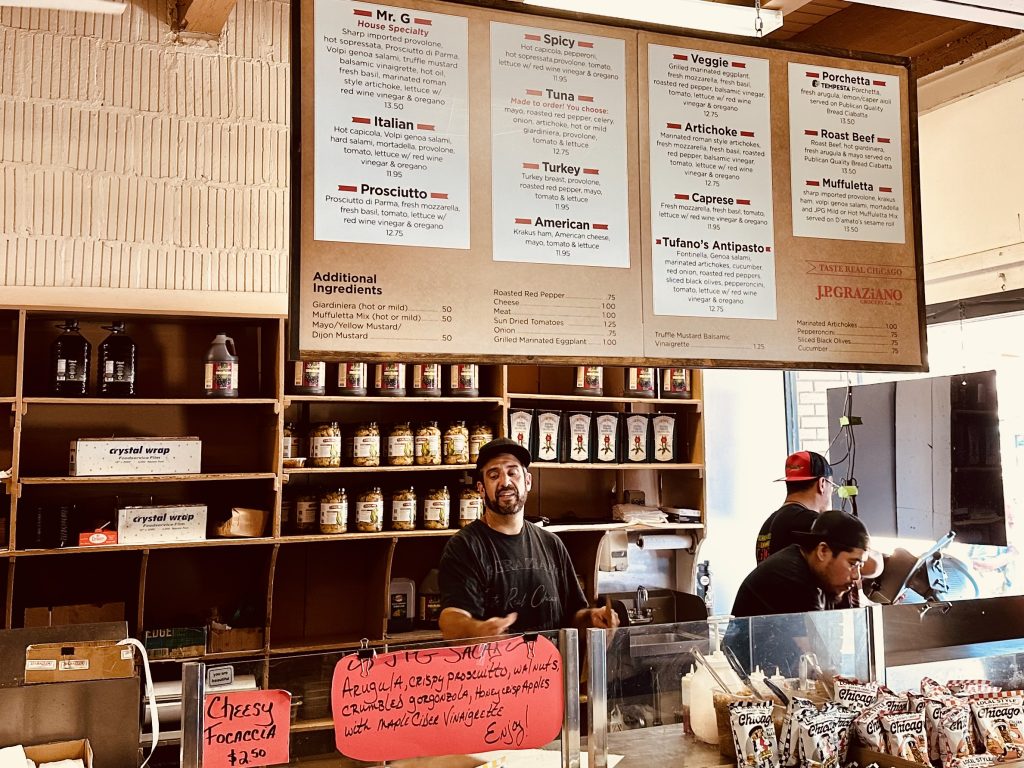
The sub shop didn’t open until 2007, when fourth-generation Jim Graziano had an idea.
He believed that turning part of the grocery into a sandwich counter would bring new energy to the store — that people who came for a sub would stay to discover the imported goods, and that word-of-mouth about the sandwiches would carry the name further than any advertisement ever could.
His father’s response was simple: “This is your baby. Everything is on you.”
Jim ran with it. Within years, the Mr. G sandwich — the deli’s now-legendary signature sub — had landed on Eater Chicago’s list of the most iconic sandwiches in the city. Lines began stretching out the door at lunch. A patio went up in 2011.
It turns out Jim knew exactly what he was doing.
What Makes These Sandwiches Different
A lot of places say they use fresh ingredients. J.P. Graziano actually means it in a way that changes the outcome entirely.
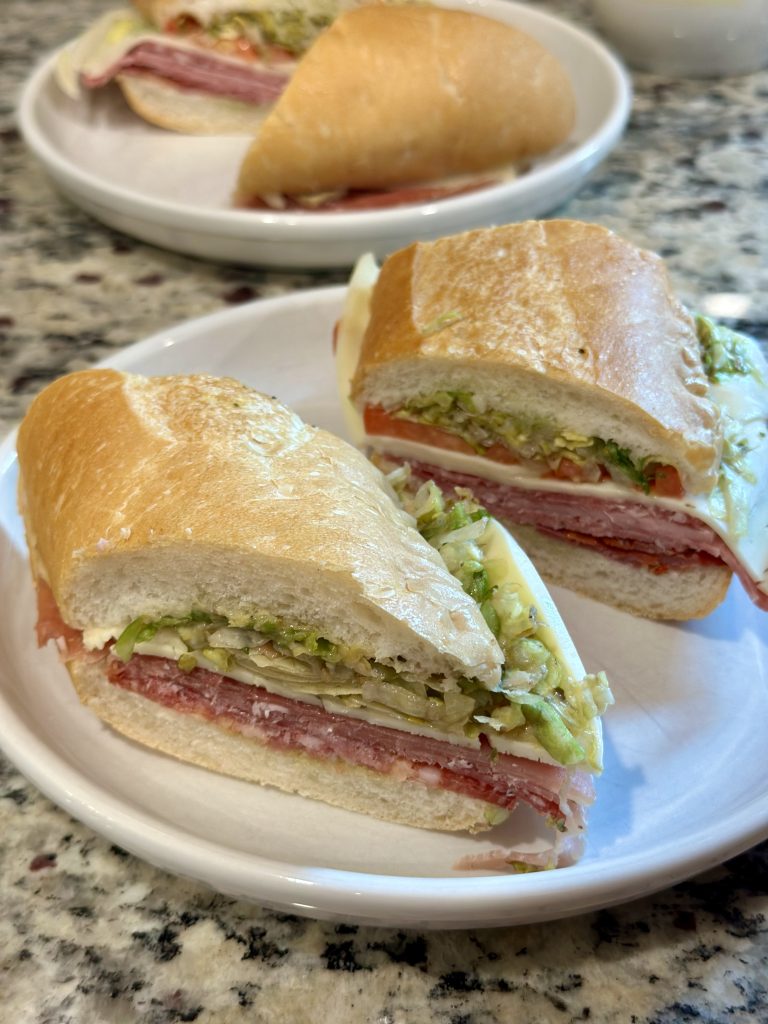
Every sandwich is made to order. The meats and cheeses are sliced seconds before each sandwich comes together — not in the morning, not in batches. The moment you place your order, the slicer comes out.
The deli uses a retrofitted slicer with specific settings for each cut of meat, because the right thickness for prosciutto is not the same as the right thickness for salami. Those details matter. They show up in the flavor.
The Italian sub, for example, is built in a specific sequence: provolone first, then hot capicola, Genoa salami, mortadella, and hard salami. The order isn’t arbitrary. It’s how the flavors layer and balance, how each ingredient gets its fair share of the bite.
The tomatoes are sliced to ideal sandwich thickness, too. Even the tuna is built as a made-to-order salad for each customer, not scooped from a pre-made bowl.
None of this is complicated. It’s just careful. And careful, done every single day for nearly two decades, is what turns a good sandwich into the best sandwich in the city.
The Mr. G: Chicago’s Most Talked-About Sub
If you only have time for one sandwich — and honestly, you should plan for at least two — order the Mr. G.
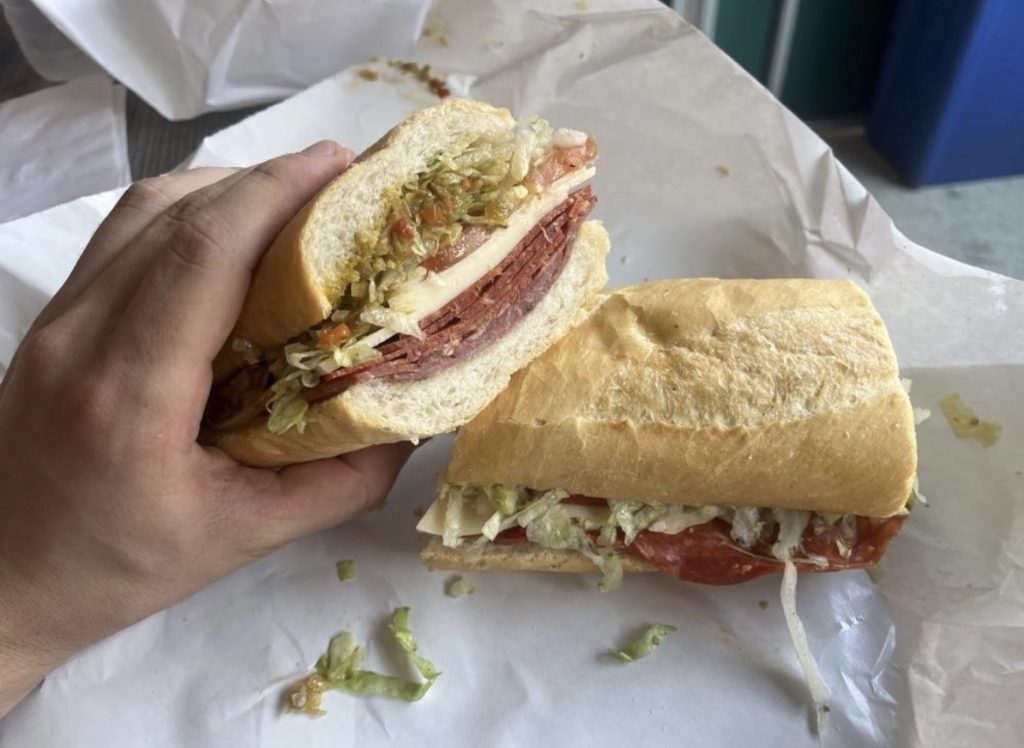
It’s the one Chicagoans have been raving about since 2007. It’s the one that inspired grown adults to describe their lunch in terms usually reserved for religious experiences. It’s the one that made Eater Chicago’s list of the most iconic sandwiches in a city that takes sandwiches very seriously.
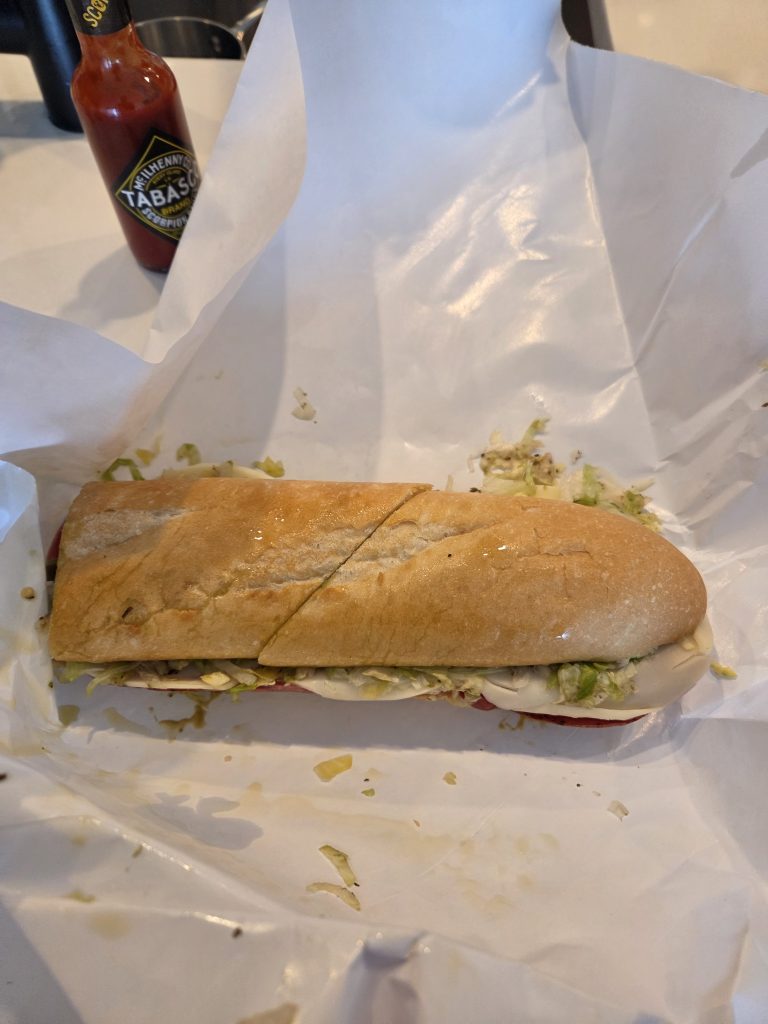
The Mr. G is built with layers of house-sliced Italian cold cuts, sharp provolone, and toppings that bring brightness and heat in exactly the right proportion. The truffle mustard is a quiet revelation — unexpected, deeply savory, and perfectly suited to the richness of the meats.
One reviewer described sitting in silence after finishing it, just appreciating what had happened. That tracks.
The bread deserves its own moment of recognition. It comes from a bakery partner that the Graziano family trusts absolutely — soft and yielding inside, with a golden crust that offers just enough resistance. It holds everything together without competing with the filling. It is, quite simply, the right bread.
Beyond the Mr. G: A Menu Worth Exploring
The Mr. G gets the most attention, but it would be a mistake to stop there.
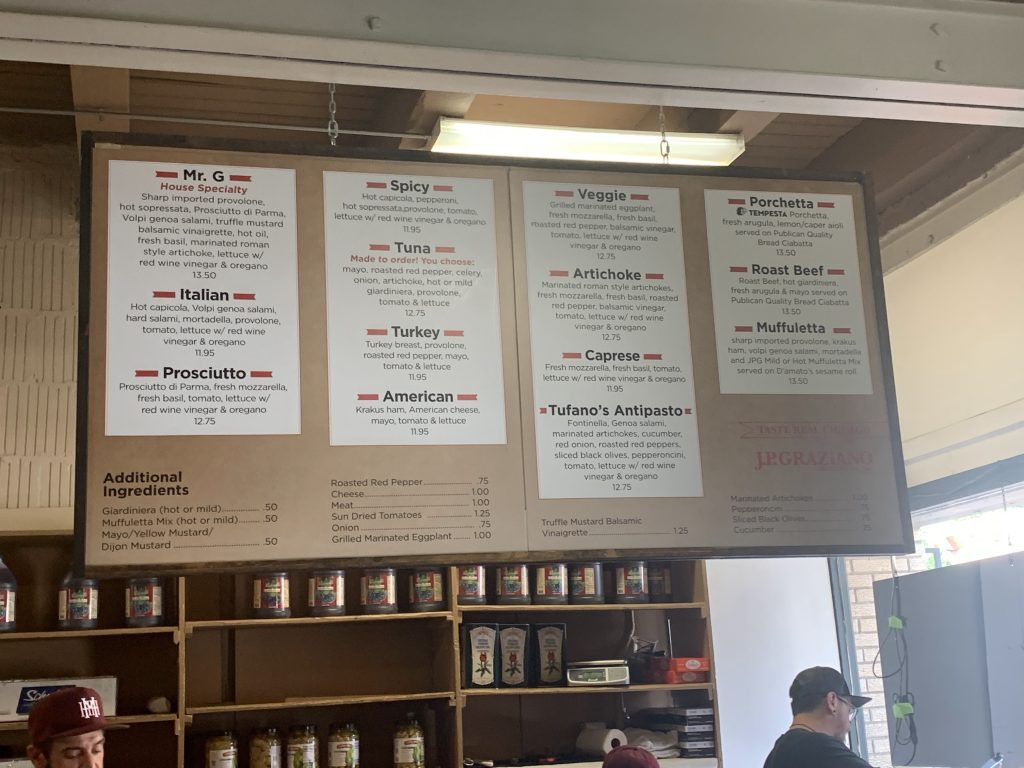
The artichoke sandwich is a recurring obsession for regulars — fresh mozzarella, roasted artichokes, and roasted red peppers on that extraordinary bread. It’s a vegetarian option that doesn’t feel like a concession. It feels like a destination.
The tuna sandwich has its own devoted following. Because every tuna order is built as a fresh salad, the result is brighter and cleaner than anything you’d expect from a deli counter.
The porchetta, the spicy Italian, the roast beef — each one inspires the same kind of loyalty. Regulars often stake their claim to a single sandwich and order it every time. But the adventurous ones cycle through the menu visit by visit, treating each trip like a new chapter.
There’s also an Italian beef, available in the evenings through the late-night window — a nod to one of Chicago’s most beloved local traditions, done with the same quality-first approach that defines everything here.
The Giardiniera You’ll Want to Take Home
Chicagoans have a deep and personal relationship with giardiniera — the spicy pickled vegetable condiment that appears on Italian beef sandwiches, pizza, and pretty much anything else that needs a kick of heat and brine.
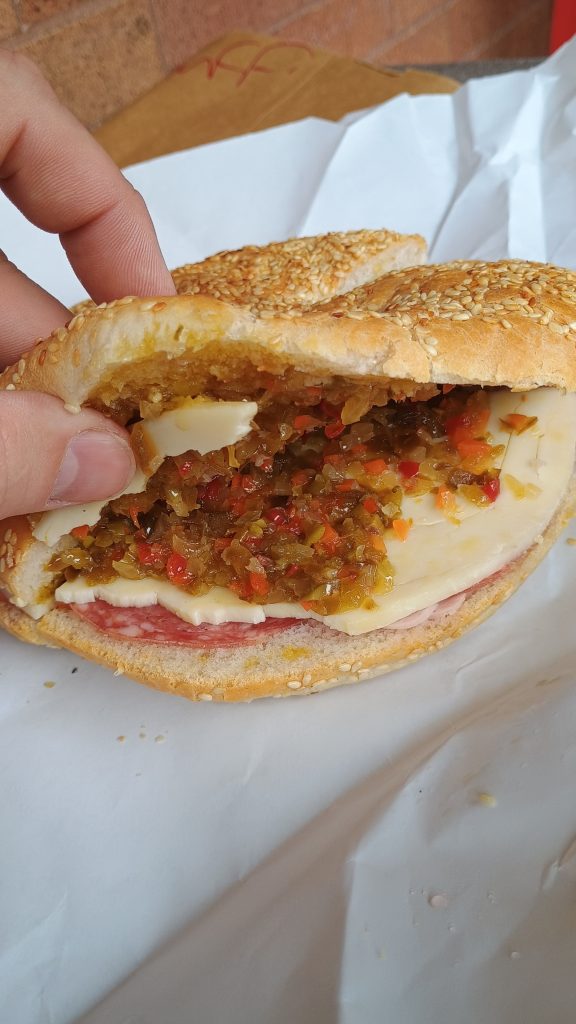
J.P. Graziano makes their own, and it’s the kind of giardiniera that makes you reconsider every jar you’ve ever bought at the grocery store.
It’s available in the shop alongside a selection of imported Italian goods that the Graziano family has been sourcing for generations: cheeses, olive oils, spices, cured meats, olives, and pastas. They also offer a THC-infused version for those who are curious.
Coming in for a sandwich and leaving with a jar of house-made giardiniera under your arm is practically a rite of passage. Many visitors do exactly that — and then order online once they’re back home and the jar runs out.
The Community That Built This Place
There’s something worth understanding about why J.P. Graziano inspires the kind of devotion it does. It isn’t just the food.
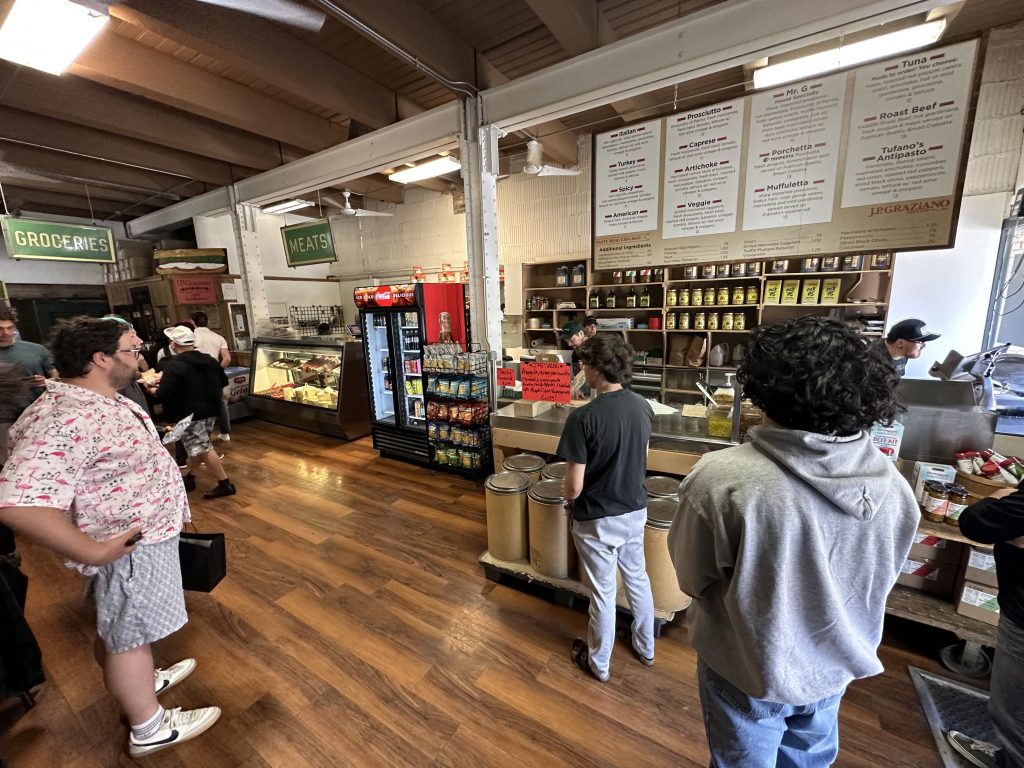
The owner has a reputation for memorizing regular customers’ orders after a single visit. Staff greet people like they’ve been coming in for years — because many of them have. Even first-timers describe being welcomed the way you’d expect to feel at a family meal, not a lunch counter.
One reviewer, reflecting on the experience, reached for a Han Solo quote: “She may not look like much, but she’s got it where it counts, kid.”
That’s J.P. Graziano exactly. The storefront doesn’t make a fuss about itself. The dining area is small and simple. There’s no elaborate concept, no dramatic décor, no curated Instagram aesthetic. What there is, is craft — and a family that has been practicing it since before most of Chicago’s trendiest restaurants were a gleam in a developer’s eye.
People come from across the country specifically for these sandwiches. They fly in. They drive hours. They make pilgrimages.
One visitor flew in from Boise, Idaho, for an authentic Italian sandwich experience and walked out declaring it entirely worth the trip. Another drove from rural Ohio, had never tried giardiniera before, and left ordering it shipped to their home. A traveler from Texas made a point of it being their first stop every time business brought them to Chicago.
That kind of loyalty doesn’t come from being good at something. It comes from being irreplaceable at it.
Step Inside: What to Expect When You Arrive
Walking into J.P. Graziano for the first time is a sensory recalibration.
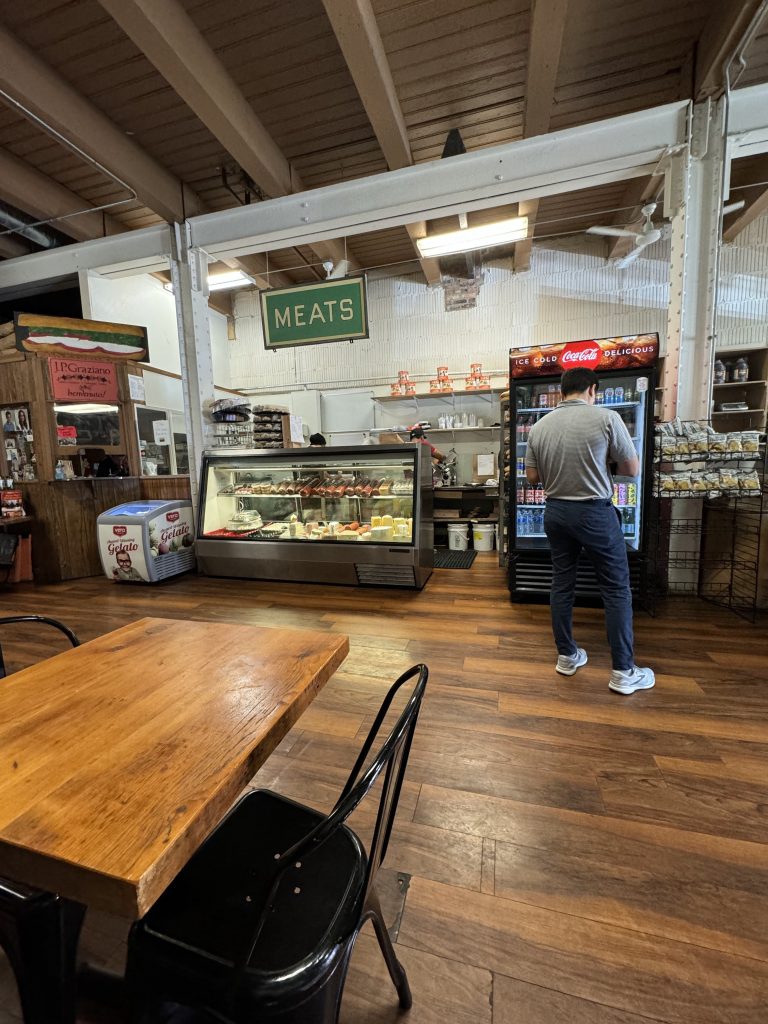
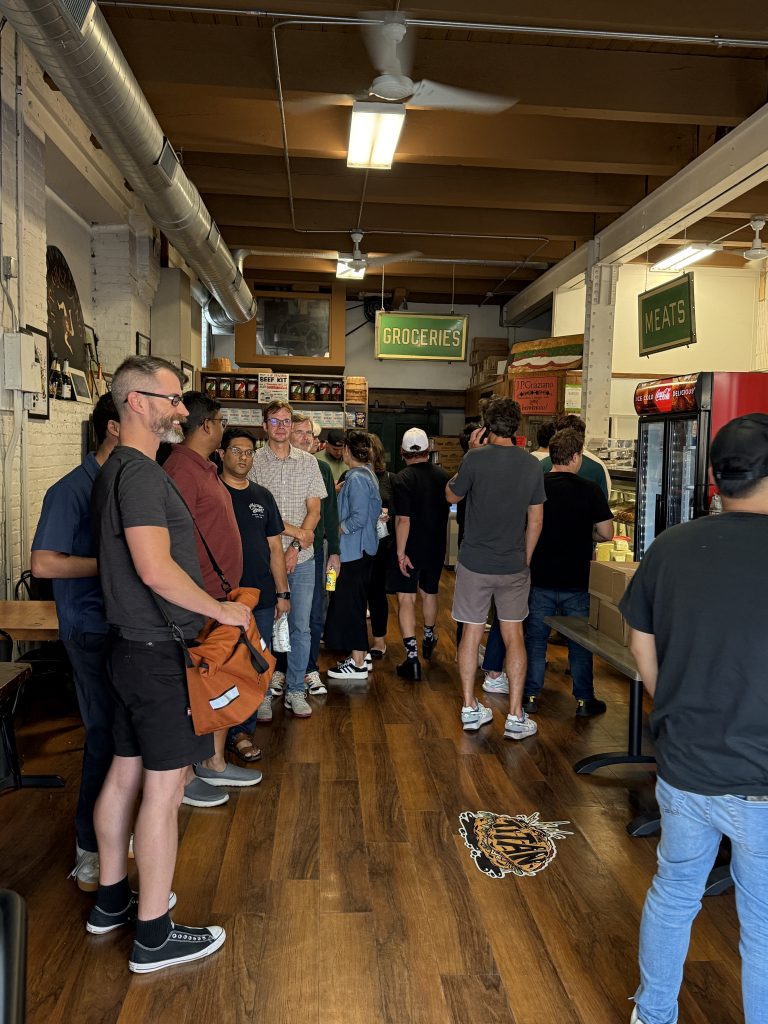
The smell hits you first — cured meats, sharp cheese, the faint sweetness of olive oil, something baking nearby. It takes a second to process. The shop is narrow, with shelves lined with imported Italian goods along one side and the ordering counter dominating the other. Vintage photographs and the residue of decades past cling to the walls in the best possible way.
The staff moves with the fluency of people who have done this a thousand times. You place your order at the counter, get directed to the cashier, and wait for your name. Even at peak lunch rush, when the line stretches out the front door, the wait is rarely more than ten minutes.
First-timers are sometimes surprised by how approachable the whole operation is. There’s nothing intimidating here, nothing precious. You ask questions, they answer them. You’re not sure what to order, they’ll point you in the right direction.
The shop also functions as a genuine Italian grocery. While you wait, browse the shelves. You’ll find imported cheeses, olive oils, dried pastas, canned goods, and spices that are difficult or impossible to find elsewhere in the city. It’s the kind of pantry haul that makes serious cooks quietly delighted.
Take your sandwich outside to the small patio when the weather cooperates. Or find a spot nearby in the West Loop — the neighborhood is full of parks and green spaces perfect for unwrapping that butcher-paper parcel and settling in.
The Late-Night Window: A Secret Worth Knowing
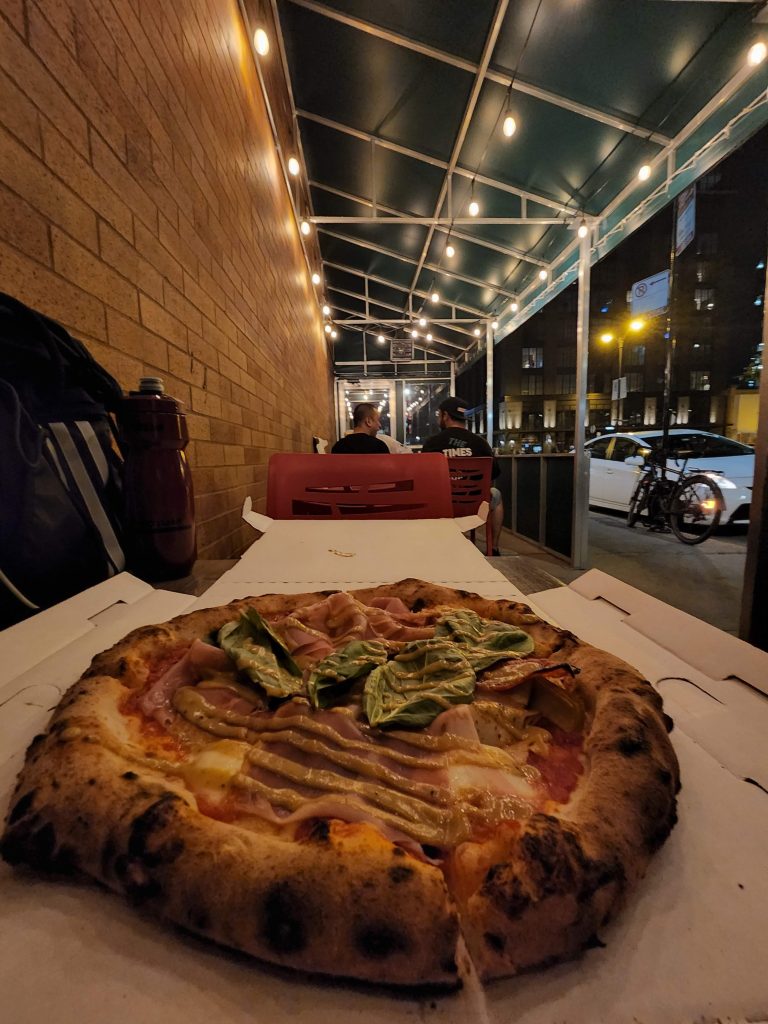
Most people discover J.P. Graziano at lunch — when the line stretches out the door and the energy inside the narrow shop crackles with the controlled chaos of a well-oiled operation.
But there’s another way to experience it.
On Thursday, Friday, and Saturday evenings, the shop opens a late-night window from 5 pm onward. Thursday and Friday run until 11 pm; Saturday goes until midnight. The evening window offers a different pace, a different energy — and the Italian beef, which is only served through this late-night service.
If you’re in the West Loop for dinner and want to end the night with something legendary, this is the window — literally and figuratively — to do it.
The Cannoli: Don’t Even Think About Leaving Without One
After the sandwich, before you go — the cannoli.
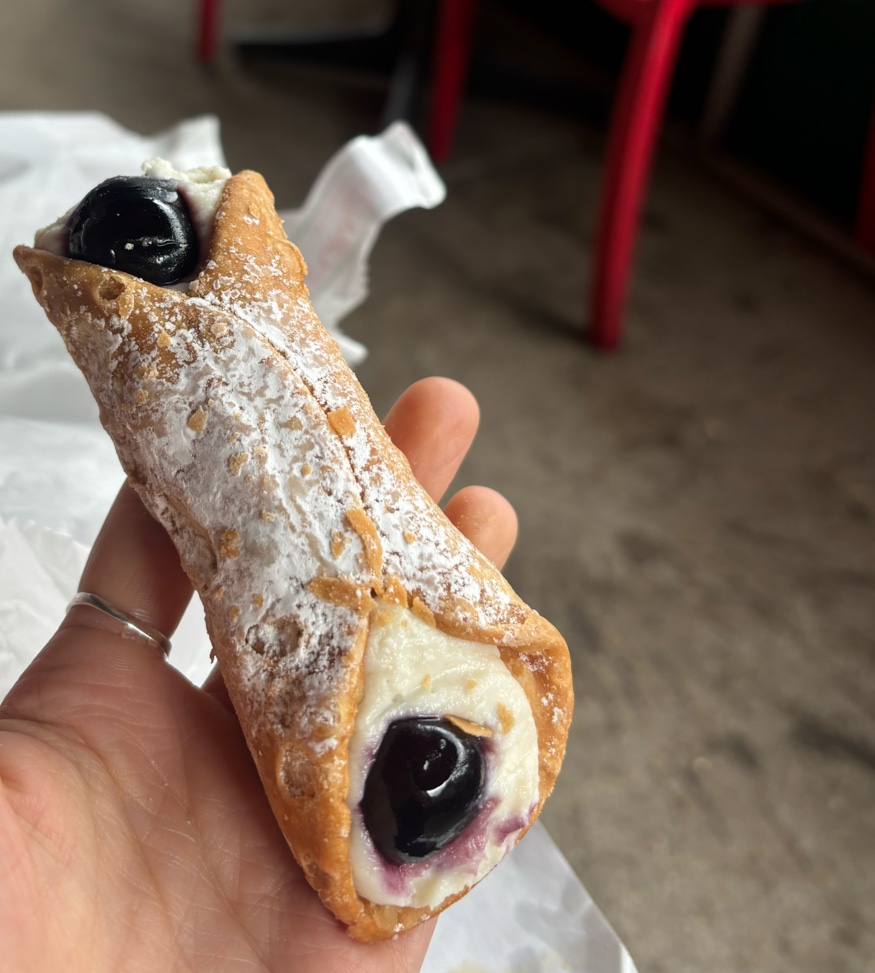
It seems almost unfair to put anything after what the Mr. G delivers. But J.P. Graziano’s cannoli are the kind of ending that rounds out an experience perfectly.
The shell is crispy without being brittle. The filling is rich without being cloying. It’s a proper Italian pastry made by people who know what a proper Italian pastry is supposed to be. More than a few reviewers have mentioned going back a second time in the same trip — not for another sandwich, but because they couldn’t stop thinking about the cannoli.
For dessert, they also occasionally offer gelato. The apricot espresso version has been described in one review as “life-changing gelato without traveling to Italy.” Plan accordingly.
A Catering Option That Brings It to You
If you can’t make it to Randolph Street — or if you want to bring J.P. Graziano to your next event — the deli has a well-regarded catering operation that has been serving Chicago for years.
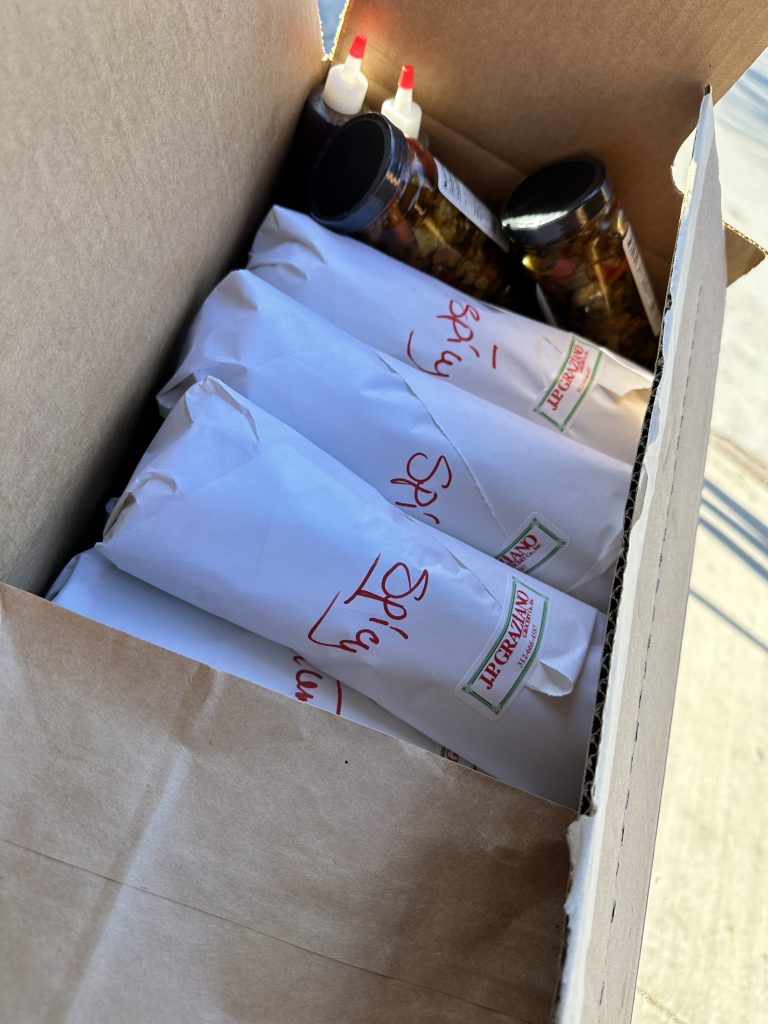
Their first major catering order, legend has it, was 60 sandwiches for a customer at the Board of Trade. It grew from there into a full-service lunch catering business that handles office parties, corporate luncheons, and special events throughout the city.
The sandwiches travel beautifully — each one wrapped tightly in sturdy butcher paper and sealed with a JPG sticker. They’ve become the go-to choice for concerts at Ravinia, boat excursions on Lake Michigan, and tailgates at Soldier Field, precisely because the quality holds.
How to Find J.P. Graziano
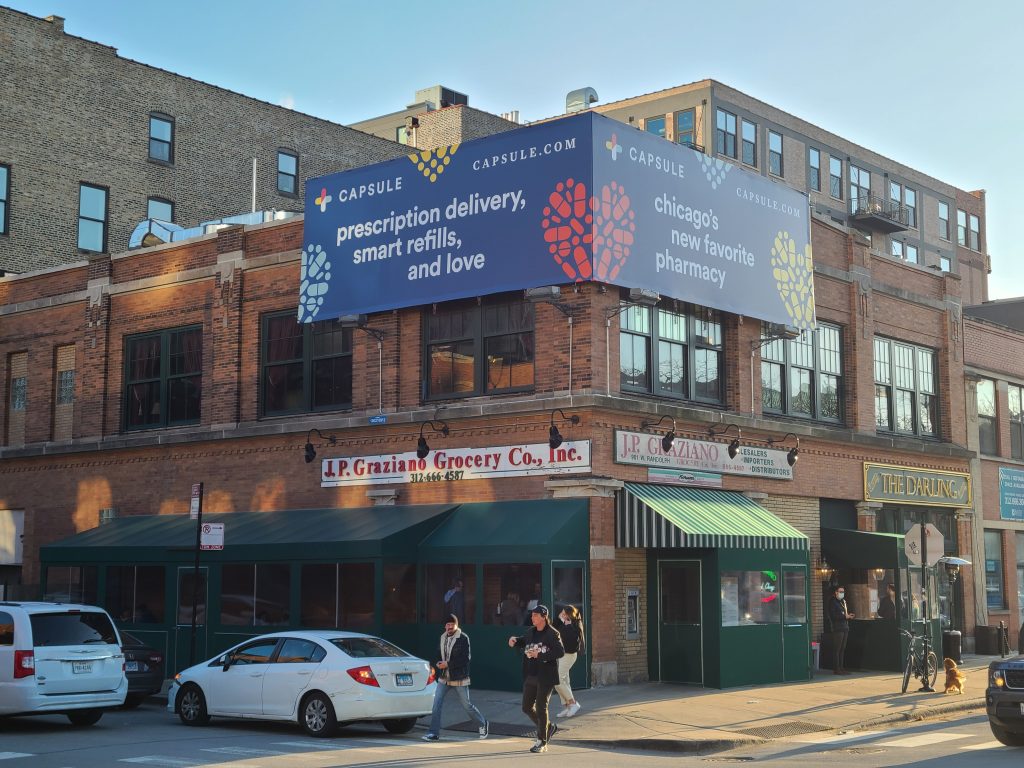
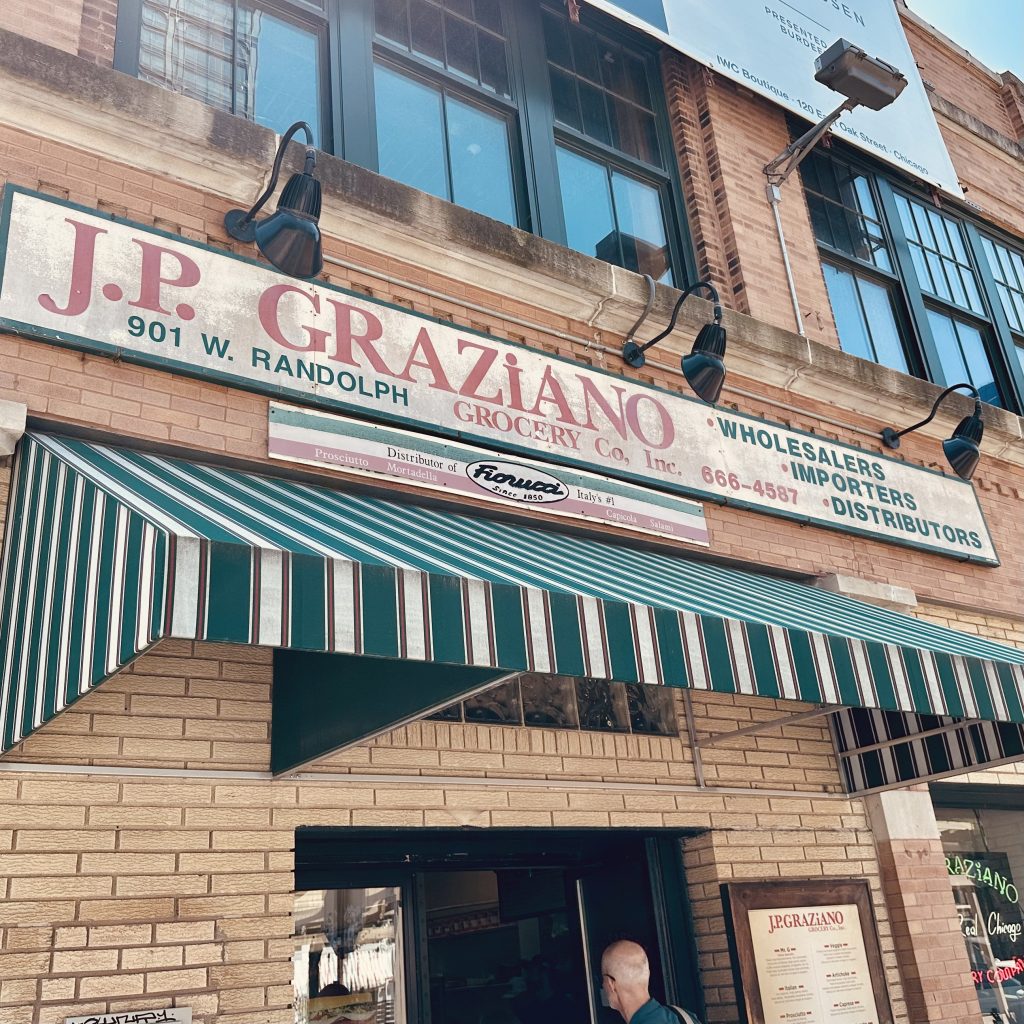
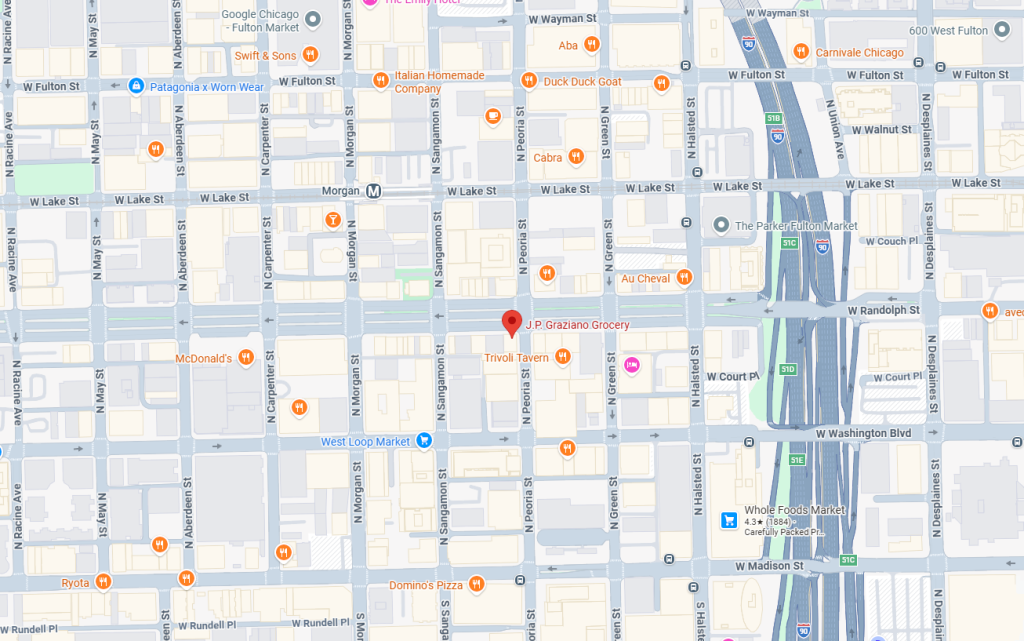
J.P. Graziano Grocery is located at 901 W Randolph Street in Chicago’s West Loop neighborhood, on the corner of Randolph and Peoria.
The shop is open Tuesday through Saturday from 11 am to 4 pm. The late-night window runs Thursday through Saturday — until 11 pm on Thursday and Friday, and midnight on Saturday. The shop is closed Sunday and Monday.
The West Loop is easily accessible from downtown Chicago, and the walk from the nearest CTA Green and Pink Line stop at Morgan Street takes just a few minutes. Parking in the neighborhood can be tight at lunchtime, so arriving early or ordering online for pickup is a smart move.
The line moves fast. The team behind the counter is efficient, practiced, and genuinely happy to help first-timers navigate the menu. If you’re not sure where to start, just ask.
Almost 90 years of sandwiches — that kind of experience shows.
More stories
This Historic Arkansas Restaurant Is a James Beard-Winning Soul Food Legend
This Charming Arkansas Café Is a Backroads Gem Worth Every Mile of the Drive
This Humble Oklahoma City Tortilleria Is the Best Kept Secret in the Sooner State
This Legendary Oregon Gelato Shop Is Worth Planning Your Whole Road Trip Around
Share this story